
Building Stronger Organizations for Sustainable Community Impact
FCI’s Journey Through the FIRE Spring Financial Management Training Program

Every dollar entrusted to an organization carries a story. It represents a donor’s confidence. It represents a community’s hope. It represents a promise that resources will be transformed into action. For the Foundation for Community Initiatives (FCI), this understanding is at the heart of our work.
FCI works alongside Indigenous Peoples and local communities to strengthen their voices, protect their rights, and create opportunities for communities to shape decisions that affect their lives and resources.
But achieving lasting change requires more than passion and good ideas. It requires an institution strong enough to carry the mission. That is why FCI staff participated in the FIRE Spring Financial Management Training Program in Bangkok, Thailand from September 21-25, 2026. And what began as a financial management training became something much deeper: an opportunity to reflect on who we are as an organization, what our partners and communities expect from us, and what we must build today to ensure that FCI remains strong tomorrow.
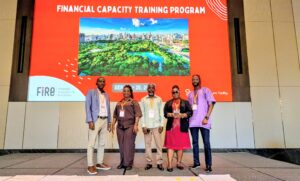
Imagine receiving resources entrusted to you to improve the lives of communities. There is excitement—but there is also responsibility. Every budget line becomes a promise. Every expenditure becomes a decision. Every financial report becomes an opportunity to demonstrate that the trust placed in your organization was well deserved. For FCI, this is what financial management means.
It is not simply about balancing accounts or preparing reports at the end of a project. It is about protecting the integrity of the work. It is about ensuring that resources reach the people and activities they were intended to support. And it is about building the confidence of the donors and partners who make our work possible. The FIRE Spring training helped FCI staff look at financial management through this wider lens.
The question was no longer simply: “Are we managing the money correctly?” The bigger question became: “Are we building the financial strength we need to sustain our mission?” That question matters because the environment in which civil society organizations operate is changing. Funding is becoming more competitive. Resources are increasingly stretched. Expectations around accountability are growing. Organizations are being asked not only to deliver projects, but to demonstrate resilience and sustainability. For FCI, this means that institutional strength is no longer something we can think about tomorrow. We have to build it today.
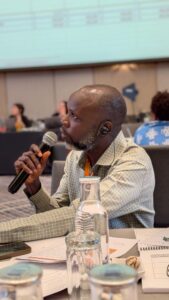
Behind Every Number Is a Person
There is another side to financial management that spreadsheets cannot show. Behind every project budget is a community waiting for an activity to happen. Behind every training is a participant who has given their time and hopes to gain something meaningful. Behind every community engagement is a person whose voice deserves to be heard. Behind every donor contribution is a belief that change is possible. This is where the FIRE Spring experience touched the heart of FCI’s work.
Staff from different organizations and regions came together with different experiences, challenges, and lessons. Yet there was a common thread: We all want our organizations to remain strong enough to continue serving the people who depend on our work. The conversations went beyond financial procedures.
- They became conversations about trust.
- About leadership.
- About organizational culture.
- About difficult decisions.
- About sustainability.
- About what happens when funding changes.
- And about how organizations can prepare themselves before a crisis arrives.
For FCI staff, the experience created space to pause and reflect. We were reminded that financial management is ultimately about people. When resources are managed well, programs can move forward. When systems are strong, staff can work with greater confidence. When organizations are financially resilient, communities are less likely to lose the support they depend on when funding environments change. Strong financial systems may not always be visible to communities—but the consequences of strong or weak systems are.
Turning Learning into Institutional Resilience
The training also gave FCI staff practical tools and knowledge to strengthen the way the organization plans, manages, monitors, and uses its resources. But the most important lesson was perhaps the simplest: Finance is not only the responsibility of the finance department, but finance is also for everyone. Financial management belongs to the whole institution. Program teams must understand budgets. Managers must understand financial implications when making decisions. Leadership must understand financial risks. Governance structures must understand accountability. Upon this understanding, our team included Mrs. Julie T.B Weah – Board Member, Mr. Tamba Nyuma – Executive Director, Ms. Spencetta Vaanii – Director of Programs, Mr. Varney T.N Benson – Finance Manager, and Mr. Alexander Timothy Cole, Sr. – Project Manager. And everyone must understand that the resources entrusted to FCI are ultimately resources entrusted for community impact. This way of thinking changes the conversation. Instead of asking only how much money remains in a budget, we begin asking: Are we using our resources strategically? Instead of looking only at expenditure, we ask: What difference did that expenditure make? Instead of waiting for financial challenges to appear, we ask: What risks can we identify and manage today? And instead of focusing only on surviving the next project cycle, we ask: What kind of institution do we want FCI to be ten years from now?
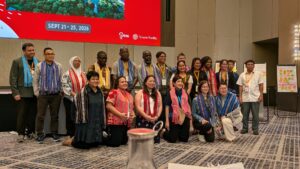
From a Training Room to a Bigger Vision
The FIRE Spring experience has strengthened an important realization within FCI: Institutional sustainability must be treated as an investment, not an afterthought. Projects may have start dates and end dates. Grants may last one year, three years, or five years. But the communities we serve will continue to face challenges long after a particular grant has ended.
That means FCI must continue building an institution capable of adapting, learning, managing resources responsibly, developing people, and responding to changing realities. This is why strengthening financial management is directly connected to FCI’s broader institutional journey. It is about creating systems that can support our ambitions. It is about strengthening staff capacity. It is about improving accountability. It is about making better decisions. It is about reducing institutional vulnerability. And ultimately, it is about ensuring that the organization remains capable of standing with communities for the long haul.
The Bigger Story
The FIRE Spring Financial Management Training Program reminded us of something fundamental: An organization cannot protect the rights and aspirations of communities if it does not also protect the strength and sustainability of the institution doing the work. That is why this journey matters. Together, they point us toward one bigger ambition: To build an FCI that is not only able to deliver today’s work, but strong enough to carry tomorrow’s mission.
Because when donors invest in stronger institutions, they are investing in more than financial systems.
- They are investing in continuity.
- They are investing in resilience.
- They are investing in local leadership.
And ultimately—
They are investing in communities that deserve an organization strong enough to stand with them for the long journey ahead.
That is the FCI we are building.
We express our gratitude to our partner The Tenure Facility (Home – Tenure Facility) for supporting not just our programs, but our institution.